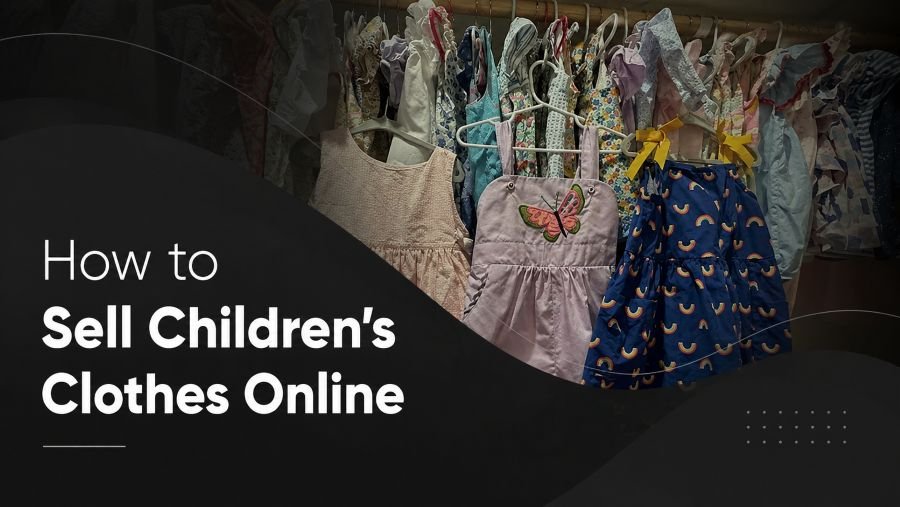
How to Sell Children’s Clothes Online in the UK Without Wasting Time
Children grow fast.
Their wardrobes grow faster.
One month a jumper fits. A few weeks later, the sleeves barely reach their wrists. Before long, drawers are packed with clothes that are still perfectly usable but no longer fit.
Selling them online makes sense.
But there is a catch.
A £2 T-shirt can take almost as much effort to photograph, list, answer questions about, pack and post as a £25 coat. Pick the wrong selling method and you can spend an evening working for pennies.
So learning how to sell children’s clothes online in the UK is really about making better choices.
What should go on Vinted?
What works better on eBay?
Should cheap clothes be bundled?
Do you need to tell HMRC?
Can you sell used pyjamas?
What about children’s fancy-dress costumes?
There is more to it than snapping a photo and typing “good condition.”
Here is how it works.
Quick Facts
| Question | Quick Answer |
|---|---|
| Best place for everyday kids’ clothes | Vinted is a strong choice for ordinary second-hand clothes and bundles |
| Best for branded or unusual items | eBay can work well |
| Best for cheap bulk bundles | Vinted or Facebook Marketplace |
| Best for local collection | Facebook Marketplace |
| Best for vintage or handmade clothes | Etsy, but ordinary modern resale is restricted |
| Do private sellers normally pay tax on outgrown clothes? | Usually not if they are simply selling personal possessions |
| Does selling 30 items automatically mean tax is due? | No |
| UK trading allowance | £1,000 gross trading income per tax year |
| Current UK VAT registration threshold | £90,000 taxable turnover |
| Should damaged or unsafe children’s clothes be sold? | No |
| Are children’s costumes treated like normal clothes? | Not always; fancy dress can fall under toy-safety rules |
| Best way to sell low-value basics | Same-size bundles |
Start by Deciding What Kind of Seller You Are
This sounds boring.
It matters.
There is a big difference between clearing your child’s wardrobe and running a resale business.
Say your daughter has outgrown ten dresses.
You paid for them for normal family use. Now you sell the bundle because you no longer need it.
That is generally personal selling.
Now imagine you visit charity shops every Saturday, buy children’s clothes cheaply, then list them online for more money.
Different situation.
HMRC may see that activity as trading because the goods were bought with resale and profit in mind.
A simple way to think about it:
Bought for your family first? Usually personal selling.
Bought specifically to sell again? You may be trading.
The distinction matters later when tax, record keeping and consumer rights enter the picture.
Sort the Clothes Before You List Anything
Do not photograph a giant pile.
Sort first.
It saves time later.
Make groups by:
- age or size
- season
- brand
- condition
- clothing type
- resale value
You might end up with piles such as:
0–3 month baby clothes
3–6 month sleepsuits
Age 2–3 summer clothes
Age 5–6 branded dresses
Winter coats
School or nursery basics
Now inspect each piece.
Look closely.
Check for:
- food stains
- paint marks
- fading
- bobbling
- stretched necklines
- worn knees
- small holes
- broken zips
- loose buttons
- damaged poppers
- weak elastic
- missing belts
- loose decorations
- unsafe cords
Kids are hard on clothes.
That is normal.
The problem starts when a seller hides it.
A £4 jumper with a clearly photographed stain may still sell.
A £4 jumper described as “perfect” when it has a stain can turn into messages, complaints and refund requests.
Be clear from the start.
What Clothes Should You Sell Individually?
Some pieces deserve their own listing.
Others do not.
Sell individually if the item has enough value or demand to make the extra work worthwhile.
Good examples include:
- premium coats
- designer children’s clothing
- branded knitwear
- occasion dresses
- special outfits
- sought-after shoes
- limited collections
- unusual prints
- vintage pieces
- new clothes with tags
A £30 used coat can justify ten photographs.
A £1.50 vest?
Probably not.
That is where bundles help.
Bundle Cheap Children’s Clothes
Bundles are one of the best tricks in kidswear resale.
Basically, buyers do not always want to pay postage for one cheap T-shirt.
But six T-shirts?
That changes the maths.
Good bundle ideas include:
5 boys’ T-shirts, age 4–5
8 girls’ leggings, age 2–3
10-piece newborn starter bundle
6–9 month summer clothing bundle
Age 3–4 nursery clothes bundle
Winter jumper bundle, age 5–6
Keep the sizes tight.
Do not throw age 2, age 4 and age 7 clothes into one random bundle unless there is a real reason.
Parents usually shop for the size their child needs now.
Make that easy.
Best Places to Sell Children’s Clothes Online in the UK
Different platforms suit different stock.
That is the main point.
Trying to force everything onto one marketplace can mean slower sales or lower prices.
Vinted
For everyday second-hand children’s clothing, Vinted is hard to ignore.
It suits:
- baby clothes
- kids’ basics
- dresses
- jumpers
- trousers
- coats
- shoes
- size bundles
- seasonal bundles
Private sellers generally do not pay a standard selling fee on Vinted. Buyers normally pay the platform’s buyer-protection charge.
That makes cheap clothing easier to list because a seller does not immediately lose part of a £3 sale to a normal seller fee.
Still, think about the buyer’s total bill.
A £2 top can feel expensive once postage and buyer charges are added.
That is another reason bundles work so well.
Vinted also has Vinted Pro for eligible professional sellers in the UK.
If you start buying stock specifically to resell and build regular inventory, check whether a professional account fits your activity.
eBay UK
eBay can be better when buyers are likely to search for a specific item.
Think:
Mini Boden floral dress age 6
rather than:
bundle of random baby vests
Exact brands, sizes, collections and product types can work well because eBay has strong search filters.
As of August 2026, UK private sellers receive up to 300 free listings each month and generally do not pay transaction fees in most normal categories.
Buyers may see a separate Buyer Protection fee.
Business sellers have a different fee structure.
eBay can be a good fit for:
- branded coats
- premium outfits
- designer kidswear
- discontinued styles
- large branded bundles
- collectable pieces
- high-value shoes
Use clear item specifics.
Do not skip size, brand, colour and condition fields.
They help buyers find the listing.
Facebook Marketplace
Sometimes postage kills the deal.
Facebook Marketplace can fix that.
It works best for:
- large clothing bundles
- several bags of baby clothes
- low-value wardrobe clear-outs
- local collection
- mixed nursery items
Imagine trying to post three huge bags of 0–12 month clothing.
Annoying.
Sell them locally and the buyer can collect them.
Watch out for scams, though.
Do not trust a payment screenshot.
Check your own payment account.
Be careful with strange courier stories, fake payment links and buyers asking for bank or card details they do not need.
Depop
Depop is more suited to fashion-led stock.
Think older children, teens, vintage looks, streetwear, branded pieces and distinctive clothing.
As of the researched UK fee structure, standard UK sellers do not pay a normal Depop selling fee, though payment processing fees can still apply.
Optional boosted listings can carry extra charges.
Use Depop when style itself is part of the appeal.
A random bundle of newborn bodysuits?
Probably better elsewhere.
Etsy
Etsy has a different purpose.
You cannot simply treat it as another Vinted.
Ordinary modern commercially made clothes generally cannot be resold there unless they fit Etsy’s permitted categories.
Etsy is more suitable for:
- genuine vintage children’s clothing
- handmade kidswear
- clothing you designed
- products made with an approved production partner
Vintage items generally need to be at least 20 years old under Etsy’s rules.
So a used 2024 supermarket dress is not suddenly “vintage.”
Call it what it is.
Your Own Website
An online store can make sense once you have regular stock.
Maybe you source premium second-hand kidswear.
Maybe you make your own clothes.
Maybe you have repeat customers.
Then a Shopify or WooCommerce store gives you more control.
You can set your own layout, build an email list, create collections and control how the business looks.
But the workload rises.
You now need to handle:
- payments
- returns
- consumer information
- privacy
- delivery terms
- customer messages
- product descriptions
- safety records
- legal business information
For a parent selling fifteen outgrown outfits, this is overkill.
For a proper resale business, it may make sense.
Clean Clothes Before Selling
Clean sells better.
Simple.
Wash items where appropriate using the care label instructions.
Remove:
- pet hair
- dust
- lint
- storage fluff
Straighten collars.
Fasten buttons.
Zip coats.
Fold clothes neatly.
Try not to drown everything in strong fragrance.
Some buyers dislike heavy fabric-softener or perfume smells.
The goal is fresh and clean.
Not scented from across the room.
How to Take Better Photos
You do not need a studio.
Daylight works.
Find a plain background.
Lay the garment flat or hang it neatly.
Take photos of:
- front
- back
- brand label
- size label
- material/care label
- print or detail
- any damage
- any stains
- fastenings
- shoes or accessories included
Keep colours accurate.
Do not use heavy filters that make a faded navy jumper look jet black.
Buyers want the real item.
Also photograph every flaw.
Yes, every one.
A close-up of a tiny mark can save a much bigger headache after delivery.
Write a Listing People Can Actually Search
Bad title:
Cute dress
Better:
Boden Girls Floral Dress Blue Age 5–6 Years
Much better.
Use words buyers actually type.
A simple title structure is:
Brand + gender/type + item + colour/style + size
Examples:
Next Boys Puffer Coat Navy Age 4–5
M&S Girls Pink Party Dress Age 7–8
JoJo Maman Bébé Baby Sleepsuit Bundle 3–6 Months
Keep it natural.
Do not stuff ten versions of the same keyword into the title.
That looks messy.
Write an Honest Description
Your description does not need to become an essay.
It needs to answer questions.
Example:
Next padded boys’ coat in navy, age 4–5 years. Used for one winter and still in good condition. Zip works properly. Small light mark near the left pocket, shown in photo 6. No holes. Name has not been written inside.
Done.
Useful details can include:
- exact size from label
- brand
- colour
- condition
- visible wear
- stains
- repairs
- alterations
- whether a name is written inside
- what is included
- fibre composition if known from the label
Never guess the material.
If the label says 60% cotton and 40% polyester, write that.
If you do not know, leave it out or say the composition label is missing.
Measurements Can Help
Children’s sizing is messy.
One brand’s age 5 can fit like another brand’s age 4.
Measurements are useful for:
- vintage clothes
- expensive coats
- dresses
- trousers
- older washed garments
- designer pieces
For tops and dresses, try:
- pit to pit
- shoulder to hem
For trousers:
- waist
- inside leg
- full length
For coats:
- chest width
- sleeve length
- back length
You do not need to measure every £1 vest.
Use common sense.
How to Price Used Children’s Clothes
Forget the original price for a moment.
Buyers care about the current item.
Look at similar listings.
Then check:
- same brand
- same size
- similar condition
- same season
- similar style
- whether it has sold before
A £40 new dress may only fetch £8 used.
Another £20 dress might fetch £15 because the print is hard to find.
Demand changes everything.
Start from the market.
Not your memory of what you paid.
Think About the Buyer’s Full Cost
This catches sellers out.
You see:
£3 top
The buyer sees:
£3 top + postage + platform charges
Suddenly it does not feel like a bargain.
Cheap pieces need bundling.
That is usually the fix.
Instead of:
£2 leggings
try:
Four pairs for £7
Now postage feels more reasonable.
Leave Room for Offers
Some platforms are built around offers.
Price slightly above your true minimum if buyers regularly negotiate there.
Example:
You would happily accept £10.
List at £12.
Someone offers £10.
Done.
But do not play games with silly prices.
A heavily worn high-street coat listed for £45 because it “cost £60 new” may sit there for months.
Dead stock takes space too.
Sell at the Right Time of Year
Timing helps.
List coats before colder weather.
Sell summer dresses before and during warm months.
School-related pieces usually get more attention around school buying periods.
Christmas clothes work better before December.
Fancy dress gets more interest before Halloween and school costume events.
Do not wait until the season is nearly finished.
Buyers plan ahead.
A little.
How to Package Children’s Clothes
Packaging should protect the clothing.
It does not need to look expensive.
Use clean, strong packaging.
Make sure it is:
- dry
- sealed properly
- strong enough for transport
- the correct parcel size
Reusable packaging is fine if it is clean and secure.
Avoid ripped carrier bags held together with random tape.
For marketplace shipping, use the provided label when required.
Keep proof of posting.
For higher-value clothes, tracking is smart.
Royal Mail and courier prices change, so check current rates before choosing your postage method.
Do not hard-code an old delivery price into every listing.
Should You Offer Free Postage?
Maybe.
But work it into the item price.
Free postage is never really free to the seller.
If postage costs you £3 and you sell a coat for £10 with free delivery, your real starting revenue is £7 before any other costs.
For cheap kidswear, marketplace-paid postage is often easier.
For higher-value items, including shipping in the price can sometimes make the listing look simpler.
Test both.
UK Tax: Do You Pay Tax on Children’s Clothes You Sell Online?
This causes a lot of panic.
Most parents clearing out their children’s old wardrobes are not suddenly running a taxable clothing business.
HMRC says people selling unwanted personal possessions such as clothes will usually not owe Income Tax simply because they sold those possessions online.
Example:
You bought a coat for £55.
Your child wore it.
Later you sell it for £14.
That normally looks like selling a personal possession.
Different story:
You buy twenty coats cheaply because you plan to resell them for profit.
Now you may be trading.
Intent matters.
Regular activity matters too.
What Is the £1,000 Trading Allowance?
The UK has a £1,000 gross trading allowance.
If you are genuinely trading and your gross trading income goes above £1,000 in a tax year, you may need to tell HMRC and deal with Self Assessment rules.
Gross means before expenses.
The UK tax year runs from 6 April to 5 April.
Do not confuse trading income with money received from selling your own used household items.
They are not automatically the same thing.
Does the “30 Sales Rule” Mean You Owe Tax?
No.
This gets misreported all the time.
Some online platforms have to report seller information to HMRC.
For goods, reporting rules use thresholds linked to transaction count and money received.
A commonly discussed threshold is fewer than 30 sales and below €2,000 in a calendar year.
That reporting rule does not create a new tax.
It also does not mean sale number 30 suddenly becomes taxable.
Marketplace reporting and actual tax liability are separate questions.
HMRC can receive data about a seller even when that seller owes no tax on the sales.
Keep those ideas apart.
Could Capital Gains Tax Apply?
For normal used kids’ clothing, this is rarely an issue.
Capital Gains Tax rules can apply to certain personal possessions sold for more than £6,000.
That is far above the value of most used children’s clothes.
A normal supermarket jumper or baby bundle is nowhere near it.
Very high-value collectible or designer items may be different.
VAT for Bigger Resale Businesses
If you build a serious resale operation, VAT can eventually matter.
The UK VAT registration threshold is currently £90,000 of taxable turnover under the normal threshold rules.
Again, turnover is not the same as profit.
Someone clearing their child’s wardrobe is unlikely to get anywhere close.
A large reseller could.
Private Seller Returns
Private sellers do not have the same distance-selling duties as normal online retailers.
That does not give you permission to lie.
If you describe a coat as:
“No damage, excellent condition”
but the zip is broken and a sleeve is torn, the buyer has a real reason to complain.
Marketplace protection rules can also affect refunds and disputes.
Accurate descriptions save trouble.
Business Seller Returns
Business sellers face stronger consumer rules.
For many online purchases, customers normally have a 14-day cancellation period after receiving the goods.
They then usually have another 14 days to send them back after telling the seller they want to cancel.
Business-sold goods also need to meet consumer standards around description, quality and fitness for purpose.
Second-hand goods can be used.
Of course.
But “used” does not mean “anything goes.”
Describe wear clearly.
Children’s Clothing Safety Matters
Kidswear needs extra care.
A damaged adult T-shirt may be ugly.
A damaged children’s garment can sometimes create a safety problem.
Look for:
- dangerous cords
- loose attachments
- broken fasteners
- sharp pieces
- loose buttons
- damaged decorative beads
- exposed metal
- unsafe zips
- recalled products
If something looks unsafe, stop.
Do not sell it.
Commercial sellers of consumer goods in Great Britain have product-safety duties.
Northern Ireland follows a different product-safety framework in some areas.
Professional sellers should check which rules apply to the place where the product is being sold.
Check Drawstrings and Cords
Children’s clothing around the neck and head needs care.
Safety standards place restrictions on cords and drawstrings because they can become trapped.
Pay extra attention to hoodies, coats and tops for younger children.
If you find a long neck cord on an old garment, do not assume it is fine because the item was sold years ago.
Standards change.
Old products can still be unsafe.
Small parts deserve a proper look.
Pull gently on:
- buttons
- beads
- bows
- sequins
- zip pulls
- decorative studs
If they are hanging off, fix the garment properly or do not sell it.
For clothes aimed at babies and very young children, loose pieces can create choking risks.
A £3 sale is not worth that risk.
Be Careful With Children’s Nightwear
Pyjamas and nightwear sit under specific UK safety rules.
The Nightwear (Safety) Regulations 1985 cover fire-safety requirements for certain new nightwear sold in Great Britain.
Some garments require fire-warning labels such as:
KEEP AWAY FROM FIRE
Second-hand nightwear has a legal wrinkle.
Trading Standards guidance says second-hand nightwear itself is not required to comply with the Nightwear (Safety) Regulations in exactly the same way as new nightwear.
But commercial sellers can still have wider product-safety duties.
So do not treat used pyjamas as automatically risk-free.
Check condition.
Check labels.
Check for damage.
If something seems unsafe, leave it out.
Fancy-Dress Costumes Are Not Always Just Clothes
This catches people out.
A superhero cape or princess costume may look like ordinary clothing, but children’s fancy-dress costumes can fall under toy-safety law.
That brings different rules around things such as:
- flammability
- cords
- warnings
- labelling
- manufacturer details
- conformity requirements
The UK Office for Product Safety and Standards has repeatedly warned about unsafe children’s fancy-dress products.
Be especially careful with old, imported or unbranded costumes.
Do not assume “second hand” removes the safety issue.
Textile Fibre Labels
Business sellers should also understand textile-labelling rules.
Where fibre information exists, copy it accurately.
If the garment says:
95% cotton, 5% elastane
use that.
Do not write:
100% cotton
because it feels soft.
Photograph the label.
Simple.
Vintage items and products with missing labels can need different treatment, so professional sellers dealing with older stock should check current Trading Standards guidance.
Check for Product Recalls
This is especially useful for professional resellers.
The UK has a Product Safety Alerts, Reports and Recalls service.
Check questionable items.
This matters more if you source:
- imported clothes
- old stock
- children’s costumes
- unusual branded products
- items with safety attachments
- clothing from unknown manufacturers
If an item has been recalled for a serious safety issue, do not quietly pass it to the next parent.
Watch for Selling Scams
Online resale attracts scammers because new sellers are easy targets.
Common tricks include:
- fake payment screenshots
- fake courier emails
- QR-code payment requests
- fake “verification” links
- buyers asking for card details
- requests to leave the platform
- overpayment claims
- fake refund emails
- changing the address after purchase
Keep payment inside the marketplace where possible.
Check payments yourself.
Do not click strange links because someone says your money is “waiting.”
If the story feels weird, stop.
Do Not Give Buyers More Personal Information Than Needed
Be careful.
The buyer usually does not need:
- your card PIN
- online banking password
- full card details
- one-time banking code
- email login
- random identity documents
Real marketplaces do not need a buyer to collect that data from you through chat.
For home collection, think about privacy too.
Use a safe arrangement.
How Much Time Should You Spend on a Listing?
This is the hidden cost.
Imagine a £2 item.
You:
wash it,
photograph it,
write the listing,
answer three questions,
accept an offer,
find packaging,
print a label,
walk to the parcel shop.
That £2 sale suddenly looks less exciting.
Set a minimum effort rule.
For example:
Under £5 value? Bundle it.
That one habit can save hours.
A Simple Selling Plan
Here is a practical way to handle one wardrobe clear-out.
Premium pieces: list individually.
Everyday clothes: make same-size bundles.
Large cheap bundles: try local collection.
Fashion-led older kids’ clothes: test Depop.
Searchable branded items: test eBay.
Normal baby and kidswear: start with Vinted.
Unsafe or damaged pieces: recycle or dispose of them responsibly rather than selling them.
No need to make it complicated.
Common Mistakes That Slow Sales
A lot of sellers make the same errors.
Asking almost-new prices
Used clothing usually needs a meaningful discount.
Bad photos
Dark bedrooms and blurry images kill trust.
Hiding stains
Buyers notice.
Creating random-size bundles
Parents want usable sizes.
Ignoring postage cost
The buyer sees the full checkout price.
Writing one-line descriptions
“Good condition” tells almost nothing.
Listing every cheap item separately
Your time disappears.
Guessing fibre content
Use the label.
Ignoring safety
Kidswear deserves more care.
Treating platform reporting as a new tax
It is not.
Can You Turn Children’s Clothes Reselling Into a Business?
Yes.
But then treat it like one.
You may start by selling your own family clothes.
Then maybe you learn what sells.
Soon you start buying stock.
At that point, keep records.
Track:
- what you bought
- what you paid
- selling price
- platform fees
- postage
- packaging
- refunds
- returns
- mileage where relevant
- other business costs
Also work out your true profit.
Revenue can look impressive.
Profit tells the real story.
Selling £2,000 of clothes does not mean you made £2,000.
Is an Online Store Better Than Vinted?
Not at first.
Marketplaces already have buyers.
A new website has none.
You have to bring traffic yourself through search, social media, email, paid ads or repeat customers.
That takes work.
Use a website when you have a reason.
For example:
- regular inventory
- a recognised niche
- repeat customers
- better margins
- your own brand
- a strong social audience
Until then, existing marketplaces can be easier.
Final Thought
Selling children’s clothes online can be worth doing.
Just do not turn every £1 vest into a 20-minute job.
Sort first.
Bundle the cheap stuff.
List the good pieces properly.
Show every flaw.
Use the marketplace that suits the item.
And if selling shifts from clearing your own wardrobe to buying stock for profit, start treating the tax, returns and product-safety side seriously.
That is where casual selling becomes a business.
FAQs
What is the best app for selling children’s clothes in the UK?
Vinted is a strong choice for everyday children’s clothing and bundles. eBay can work better for branded, valuable or highly searchable pieces.
Is it worth selling children’s clothes online?
Yes, especially if the clothes are in good condition. Bundling cheaper items usually makes the time and postage more worthwhile.
Should I sell baby clothes individually or in bundles?
Low-value baby clothes usually work better in bundles grouped by size and season. Premium or new-with-tags pieces may earn more individually.
Do I have to pay tax on old children’s clothes I sell?
Usually not if you are simply selling personal clothes that your family no longer needs. Buying goods specifically to resell for profit may count as trading.
Does selling 30 items online mean I owe HMRC tax?
No. Marketplace reporting thresholds and actual tax liability are separate rules.
What is the UK trading allowance?
The trading allowance is £1,000 of gross trading income per tax year. It becomes relevant if you are actually trading rather than simply selling personal belongings.
Can I sell stained children’s clothes?
You can sell worn clothing if it is still safe and the condition is described honestly, though heavily damaged or very low-value clothes may be better recycled.
Can I sell used children’s pyjamas?
Used nightwear can be sold, but commercial sellers should still consider general product-safety duties. Check fire labels, condition and current UK guidance.
Can I sell children’s fancy-dress costumes online?
Yes, but children’s fancy dress can fall under toy-safety rules rather than being treated exactly like ordinary clothing. Commercial sellers should check the relevant safety requirements.
Can I sell kids’ clothes on Etsy?
Only in permitted categories. Etsy is mainly suitable for genuine vintage clothing, handmade pieces or seller-designed products rather than ordinary modern second-hand resale.
How should I price used kids’ clothes?
Check comparable listings for the same brand, size and condition. Price around the real resale market rather than relying only on the original retail price.
What should I photograph when selling children’s clothes?
Show the front, back, size label, brand label, care label, main details and every visible flaw.