What Is Thrifting? Meaning, Benefits, How It Works and What to Know
Introduction
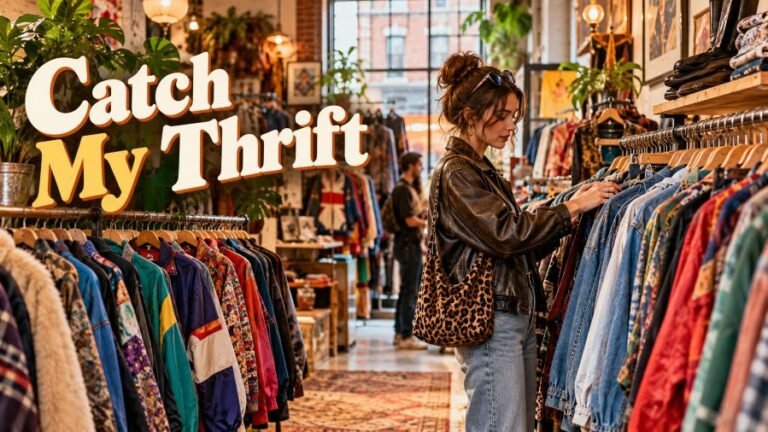
You spot a jacket for £8. It still looks great. Someone owned it before you, but that hardly matters. You like it, it fits, and buying it gives an existing piece of clothing another chance to be worn.
That is thrifting.
Thrifting is the practice of looking for and buying previously owned goods from places that sell second-hand items. Clothing gets most of the attention, but people also thrift shoes, bags, books, furniture, records, jewellery, homeware, toys and plenty more.
Cambridge Dictionary describes thrifting as looking for or buying goods from thrift stores or other places selling used things such as clothes, books and furniture. It also labels the term as mainly US English.
For UK shoppers, there is a small language difference worth knowing.
Americans commonly say thrift store.
British shoppers are much more likely to say charity shop, second-hand shop or simply buying preloved. Cambridge directly gives “charity shop” as the UK equivalent of “thrift shop.”
The idea, though, stays the same: buy something that already exists and keep it in use.
Quick Facts About Thrifting
| Question | Quick answer |
|---|---|
| What is thrifting? | Shopping for previously owned goods |
| What is a thrift store called in the UK? | Usually a charity shop |
| Is thrifting the same as second-hand shopping? | Broadly, yes |
| Does thrifting only mean clothes? | No |
| Can you thrift online? | Yes |
| Are all thrifted clothes vintage? | No |
| Is thrifting always cheap? | No |
| Can thrifted goods be resold? | Yes |
| Where can you thrift? | Charity shops, markets, resale sites, vintage stores, car-boot sales and more |
| Should thrifted clothes be washed? | Usually yes, following the care label |
What Does Thrifting Actually Mean?
Think of thrifting as shopping from the existing pool of goods rather than going straight to newly manufactured products.
The item may have had one previous owner. It may have had five. Sometimes it has barely been used at all.
A person might donate an unwanted coat to a charity shop. The shop checks it, prices it and puts it on a rail. Another person buys it and wears it for several years.
The coat has moved from one wardrobe to another rather than being thrown away.
A simple thrift cycle looks like this:
Own → Donate or Sell → Resell → Buy → Use → Donate or Sell Again
Some products can repeat that cycle several times.
Is Thrifting the Same as Second-Hand Shopping?
They are closely related.
Second-hand is the broad description. It means an item has previously belonged to somebody else.
Thrifting usually describes the act of searching for and buying those goods, often with a bargain-hunting or discovery element.
So a used Levi’s jacket listed online is a second-hand product.
Scrolling through listings trying to find one at a good price can be called thrifting.
The terms overlap enough that people often use them interchangeably.
Thrifting vs Charity Shopping
In Britain, these are often describing the same shopping activity, but there is one difference.
A charity shop raises money for a charitable organisation.
A normal second-hand shop may be a private business.
Cambridge defines a UK charity shop as a shop where a charity sells donated used goods, and sometimes new goods, to raise money for its work.
That distinction matters.
You can thrift in a charity shop, but thrifting is not limited to charity shops.
You can also thrift through:
- Independent second-hand stores
- Flea markets
- Car-boot sales
- Vintage stores
- Online marketplaces
- Local markets
- Jumble sales
- Resale apps
- Specialist collectors’ shops
The location changes. The basic activity does not.
Thrifting vs Vintage: They Are Not the Same Thing
This causes a lot of confusion.
A product does not automatically become vintage just because somebody else owned it.
Imagine someone buys a T-shirt new in 2025 and sells it in 2026.
That shirt is second-hand.
Calling it vintage would be a stretch.
Vintage normally refers to older pieces connected with an earlier fashion period, design era or production period. Vintage stores also tend to select their stock more carefully, so their prices may be far higher than those in a normal charity shop.
That gives us a useful distinction:
Second-hand: previously owned.
Thrifted: found or bought through second-hand shopping.
Vintage: older and linked to an earlier period.
Preloved: a softer retail term for second-hand.
Resale: selling an item again.
Upcycled: an existing item that has been changed, repaired or remade into something different.
One item can fit several of these descriptions at once.
A 1990s jacket found in a charity shop, for example, could be second-hand, thrifted and vintage.
What Can You Buy While Thrifting?
Almost anything that can safely have another owner.
Fashion gets the most attention because clothing is easy to donate, store, ship and resell, but thrift shops can contain a surprising mix of stock.
Common thrift finds include:
- T-shirts and shirts
- Jeans and trousers
- Dresses
- Coats and jackets
- Shoes and trainers
- Handbags
- Jewellery
- Watches
- Children’s clothing
- Books
- Vinyl records
- DVDs and games
- Furniture
- Lamps
- Kitchenware
- Glassware
- Pictures and prints
- Cameras
- Toys
- Sporting goods
- Collectibles
Oxfam’s Oxford store, for example, lists donated clothes, accessories, homewares, music, stamps, coins, pictures and postcards among its stock.
That unpredictability is part of the fun.
You rarely know exactly what will be there.
Why Do People Go Thrifting?
Saving money is an obvious reason.
It isn’t the whole story.
1. You Can Find Lower Prices
Previously owned everyday clothing can cost much less than comparable new products.
Current Charity Retail Association figures put median selling prices at £5.21 for womenswear and £6 for menswear across its 2025 pricing sample. The reported average charity-shop transaction value for April to June 2026 was £7.51.
Those numbers do not mean every second-hand item is cheap.
Popular vintage, luxury handbags, rare trainers, designer clothes and collectible pieces can be expensive.
Sometimes very expensive.
Still, ordinary charity shops can give shoppers access to useful clothes and household goods at relatively low prices.
2. Every Shop Is Different
Normal retail is predictable.
Walk into a chain clothing shop and you may see the same products in Manchester, Birmingham, Glasgow and London.
A charity shop works differently.
Stock depends heavily on what people have donated locally and what has already sold.
A brilliant jacket could appear today and be gone tomorrow.
There may be one.
One colour. One size.
That creates the treasure-hunt feeling people associate with thrifting.
3. You Can Find Older or Discontinued Products
Brands stop making designs.
Fashion changes.
Book editions disappear. Furniture ranges get replaced. Trainers get discontinued.
Second-hand markets give those products somewhere to remain available.
Someone searching for a particular Levi’s cut, an old football shirt, a discontinued handbag or an older vinyl pressing may have more luck in resale markets than conventional retail.
4. Thrifting Can Keep Existing Products in Use
This is where second-hand shopping connects with textile waste.
WRAP reported in December 2025 that 49% of used textiles in the UK end up in the bin, with an average person throwing away around 35 clothing items each year.
A wearable jumper sitting unwanted in one person’s wardrobe may still be useful to somebody else.
Donation and resale give it that chance.
5. Charity Shopping Can Raise Money for Charitable Work
Buying from a charity shop has another effect: the shop exists to support its parent charity.
The UK charity-retail sector is large.
The Charity Retail Association reports more than 9,900 UK charity shops, supported by more than 223,500 volunteers. Charity retail contributed more than £300 million in profit to parent charities during 2024/25.
So buying a second-hand book or coat from a charity retailer isn’t quite the same transaction as buying it from a private resale seller.
Is Thrifting Really Better for the Environment?
It can be, but there is an important detail people often miss.
Buying something second-hand has the strongest environmental case when that purchase replaces something you would otherwise have bought new.
WRAP studied this idea through what it calls a displacement rate.
Its 2025 research found a 64.6% displacement rate for resale. Put more simply, for every five preloved clothing purchases studied, roughly three replaced purchases that otherwise would have been made new.
That matters because a second-hand garment has already been manufactured.
Keeping it in use can avoid some of the demand associated with producing a replacement.
But buying 20 unwanted thrift-store tops simply because they cost £2 each doesn’t suddenly make overconsumption harmless.
You still bought 20 things you may not use.
A smarter thrift habit is pretty simple:
Buy things you actually want. Wear them. Keep them. Pass them on responsibly once you are finished.
That is where reuse makes sense.
How Big Is Thrifting in the UK?
Very big.
Britain already has thousands of charity shops, and online resale has opened second-hand shopping to people who may rarely visit one.
Consumer interest is strong too.
WRAP reported in March 2026 that 54% of UK citizens said they were happy to purchase preloved clothing. The same research found 45% buy clothing at least once a month.
Online marketplaces have made finding specific second-hand products much easier.
Instead of checking ten local shops for one particular jacket, a shopper can search thousands of listings from home.
That changes the experience quite a bit.
Physical thrifting is about browsing what happens to be there.
Online thrifting can be highly specific.
What Is Online Thrifting?
Online thrifting means buying second-hand goods through websites, apps or online charity shops.
The product is still previously owned. Only the way you find it changes.
Platforms such as Depop have built large marketplaces around preloved fashion. Depop’s current newsroom figures report approximately 56.3 million registered users, more than 68 million items for sale and up to 600,000 new listings per day.
Online thrifting has some clear advantages.
You can search by:
- Brand
- Size
- Colour
- Price
- Style
- Product type
- Condition
- Keyword
But you lose one big thing: physical inspection.
You cannot feel the fabric, check the zip yourself or try the item on before buying.
Photos and descriptions matter far more.
How to Start Thrifting Without Buying Junk
Walking into a charity shop and grabbing everything cheap isn’t a great plan.
A low price is still wasted money if you never use the item.
Try this instead.
Start With Something You Need
Maybe you need jeans.
Look for jeans.
That does not mean ignoring an unexpected great find, but having a rough purpose helps stop random purchases.
Check the New Price
A £15 second-hand item isn’t automatically a bargain.
The same product may cost £18 new.
Check.
This matters even more online, where sellers set their own prices.
Inspect the Condition
Look beyond the front of the garment.
Check:
- Collar
- Cuffs
- Underarms
- Seams
- Knees
- Hems
- Buttons
- Zips
- Pockets
- Soles
- Fabric wear
Small damage may be easy to fix.
A broken zip on a cheap coat may wipe out the saving once repair costs are added.
Look for Stains and Smells
Some marks wash out.
Others don’t.
Strong smoke, damp or mildew smells can be difficult to remove, particularly from coats, furniture and delicate fabrics.
Use your judgement.
Check the Material
Fabric can tell you a lot.
Wool, cotton, linen, leather and other materials may behave very differently from cheap synthetic alternatives.
Read the label rather than judging quality from the brand name alone.
Don’t Trust the Size Label Too Much
Sizing changes between brands, countries and decades.
A vintage medium may fit nothing like a current medium.
For online purchases, measurements are often more useful than the size printed on the tag.
Ask Yourself One Question
Would I still want this if it wasn’t cheap?
That question can stop a lot of bad purchases.
Should You Wash Thrifted Clothes Before Wearing Them?
Usually, yes.
You don’t know exactly how an item was stored, handled or worn before reaching you.
Check the care label first.
A cotton T-shirt may handle a normal machine wash. Wool, silk, leather, embellished clothing and some older garments may need gentler treatment or specialist cleaning.
Do not assume hotter is always better.
The aim is to clean the item without ruining it.
Are Thrift Stores Clean and Safe?
Most established charity shops sort stock before putting it out for sale, but shoppers should still inspect used goods themselves.
Clothing may show wear.
Furniture may need cleaning.
Electrical products deserve extra care because condition and safety matter far more than appearance.
Some products also need much more caution on the second-hand market.
Items where history, hygiene or safety standards matter should be researched before purchase. A bargain is not worth taking an unnecessary risk.
Is Thrifting Always Cheap?
No.
This is probably one of the biggest myths around second-hand shopping.
Basic donated clothes at charity shops can be inexpensive. Rare products are a different story.
A seller who knows that a jacket is collectible will probably price it accordingly.
The resale market includes everything from £2 tops to designer handbags worth thousands of pounds.
So:
Thrifted does not automatically mean cheap.
And:
Second-hand does not automatically mean low quality.
Price depends on the item, condition, rarity, brand, demand and seller.
What Is Thrift Flipping?
Thrift flipping usually means buying an undervalued second-hand product and selling it again for a higher price.
For example:
Someone finds a branded jacket for £8.
They check the model and recent resale prices.
They clean it, take good photographs and list it online for £30.
If somebody buys it, the difference between the buying and selling price contributes toward the reseller’s margin after fees, postage and other costs.
Some sellers do this casually.
Others build businesses around second-hand sourcing.
Is Reselling Thrifted Items Wrong?
People disagree on this.
Some shoppers feel professional resellers take the best products from affordable charity shops and relist them at much higher prices.
Resellers make a different argument. They spend time searching, checking, cleaning, photographing, measuring, listing, storing, answering questions and shipping goods to buyers who may live hundreds of miles away.
There isn’t one simple answer that fits every situation.
Buying one £6 jacket and later selling it online isn’t the same behaviour as clearing entire rails simply to mark everything up.
The details matter.
A Short History of Charity Shopping in Britain
Buying used goods is much older than modern charity retail, but Britain’s charity-shop network became a familiar part of the high street during the twentieth century.
Oxfam records a temporary fundraising shop in Oxford in 1943.
Its first permanent shop started trading on Broad Street, Oxford, in December 1947. Oxfam says the organisation now has hundreds of shops across the country.
The model grew because it solves several problems at once.
People have unwanted goods.
Other people want affordable goods.
Charities need ways to raise funds.
Put those three things together and the charity-shop model makes sense.
Why Has Thrifting Become So Popular?
There isn’t one reason.
Price matters.
Fashion matters too.
Social media has made vintage outfits, thrift hauls and unusual second-hand finds much more visible. Online resale apps have removed much of the geographic limit. A buyer in Leeds can find a jacket being sold in Brighton without travelling anywhere.
People also have far more ways to sell unwanted clothes themselves.
What used to require a classified advert, market stall or second-hand dealer can now be done with a phone camera and a marketplace account.
Still, physical charity shopping has something online resale cannot fully copy.
You walk in without knowing what you will find.
Sometimes there’s nothing.
Then you walk into another shop and find exactly what you wanted for a fraction of the expected price.
That’s the hook.
Thrifting vs Fast Fashion
Fast-fashion retail mainly puts newly produced clothing into the market.
Thrifting deals mainly with clothing and goods that already exist.
That distinction is important.
A second-hand jacket doesn’t need to be manufactured again simply because it has a new owner.
Reuse also gives unwanted clothing another route besides disposal. That matters in a country where WRAP says nearly half of used textiles still reach general waste.
Thrifting isn’t a free pass to keep buying endlessly, though.
Buying less, choosing things you’ll genuinely use and keeping clothing for longer is a much stronger habit than treating cheap second-hand clothes as disposable.
Pros and Cons of Thrifting
Pros
- You may pay less than buying new
- You can find unusual or discontinued items
- Existing products stay in use for longer
- Charity-shop purchases can support charitable work
- Stock changes constantly
- Older clothing may offer styles no longer sold new
- Online marketplaces give access to huge second-hand inventories
- Bargain hunting can be genuinely enjoyable
Cons
- Sizes are unpredictable
- Stock cannot usually be reordered
- Condition varies
- Hidden damage is possible
- Online photographs may not show every flaw
- Returns may depend on the seller or platform
- Popular vintage pieces can be expensive
- Finding the right item may take time
- Branded resale goods may need authentication
The best thrift shoppers aren’t necessarily the people who buy the most.
They are often the people who know when to leave something behind.
Common Thrifting Mistakes
Buying Only Because It’s Cheap
A £3 shirt you never wear cost £3 too much.
Ignoring Repair Costs
Cheap shoes needing new soles may end up costing more than a better pair.
Assuming Every Old Item Is Valuable
Age alone doesn’t create value.
Condition, rarity, maker, demand and provenance can matter.
Buying the Wrong Size Because “It Might Fit”
Maybe it will.
Usually your wardrobe already contains enough “maybe” clothes.
Forgetting Postage
Online bargains can stop looking like bargains once delivery charges are added.
Assuming Every Branded Item Is Genuine
Counterfeit goods can appear in resale markets.
For expensive designer items, check authenticity rather than relying on a logo.
Who Is Thrifting Good For?
Pretty much anyone who is comfortable buying previously owned goods.
It can make particular sense for:
- Students
- Families shopping on a budget
- Vintage-fashion fans
- Collectors
- People trying different styles
- Resellers
- Shoppers looking for discontinued items
- People furnishing a home cheaply
- Readers hunting for used books
- Buyers who want to keep usable goods in circulation
You don’t need to build your entire wardrobe second-hand either.
Some people thrift nearly everything.
Others occasionally buy a coat, book or piece of furniture.
Both count.
FAQ
What is thrifting in simple words?
Thrifting means shopping for items that were previously owned instead of buying everything new.
What does thrift mean?
Cambridge Dictionary defines thrift as careful use of money, especially by avoiding waste. “To thrift” can also mean looking for or buying used goods.
What is a thrift store in the UK?
The closest common UK term is charity shop. Cambridge lists “charity shop” as the British equivalent of the US term “thrift shop.”
Is thrifting just buying used clothes?
No. You can thrift furniture, books, jewellery, records, homeware, toys, bags and many other previously owned goods.
Is thrifting the same as vintage shopping?
No. A thrifted item can be quite new. Vintage normally refers to older products connected with an earlier period or style.
Is thrifting cheaper than normal shopping?
It often can be, especially in charity shops, but there is no guarantee. Rare, designer and highly sought-after second-hand goods may cost more than ordinary new products.
Can I thrift online?
Yes. Online resale marketplaces, charity-shop websites and specialist second-hand stores all allow people to thrift without visiting a physical shop.
Should I wash thrifted clothes?
Usually, yes. Check the care label first so you don’t damage delicate fabrics or older garments.
Is thrifting sustainable?
It can reduce the need for new purchases and keep existing products in use. WRAP found that 64.6% of resale clothing purchases studied displaced a new purchase. The benefit is strongest when second-hand shopping replaces buying new rather than simply increasing the amount you consume.
Can I resell clothes I find in charity shops?
Yes, provided the sale itself follows applicable laws and marketplace rules. Reselling second-hand goods is a common part of the wider resale market.
Final Thought
Thrifting sounds trendy. The idea behind it isn’t new at all.
One person has something they no longer need. Someone else still wants it.
Instead of sending a useful coat, book, chair or pair of jeans straight toward the waste stream, the item changes hands and gets used again.
Sometimes you save money. Sometimes you find something you couldn’t buy new even if you wanted to. In a charity shop, your purchase can also help raise funds for the organisation running it.
And sometimes?
You simply find a really good jacket for eight quid.
That’s reason enough to check the rail.