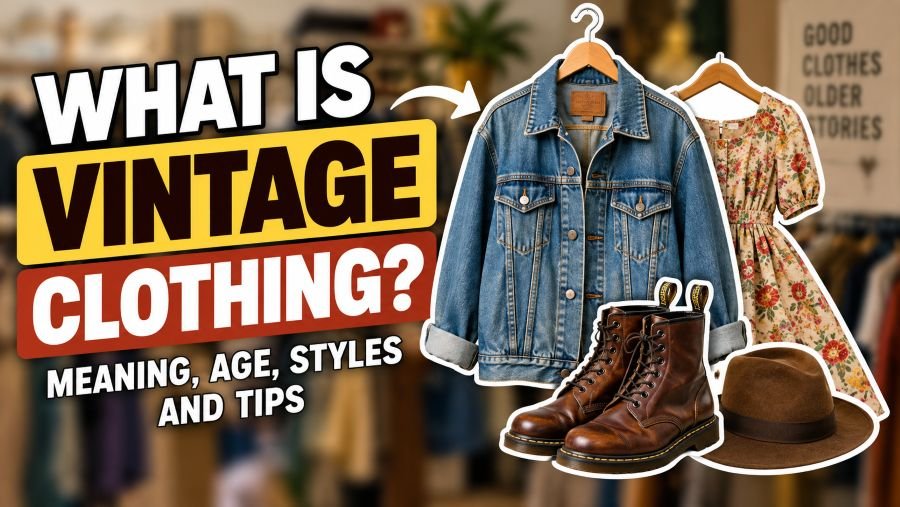
What Is Vintage Clothing? Meaning, Age, Styles and Tips
Vintage clothing has become a big part of fashion again. Old denim. Classic jackets. Band T-shirts. Dresses from another decade.
But one question keeps coming up: what is vintage clothing?
Vintage clothing means genuine clothing made in an earlier period. A widely used standard is that an item should be at least 20 years old to be called vintage. Etsy uses this 20-year minimum for products listed as vintage, while the Vintage Fashion Guild also uses 20 years as its member standard.
So, in 2026, clothing made in 2006 or earlier may fall within the common vintage age range.
That does not mean every old shirt is special. Age is one part. The label, fabric, construction, condition, style and history can tell you much more.
Quick Facts About Vintage Clothing
| Quick Fact | Answer |
|---|---|
| What does vintage clothing mean? | Genuine clothing made in an earlier period |
| How old is vintage clothing? | Commonly 20 years or older |
| Is second-hand clothing always vintage? | No |
| Is retro clothing vintage? | Not always |
| Can unworn clothing be vintage? | Yes |
| Can 2000s clothing be vintage? | Yes, depending on its manufacturing year |
| Does vintage mean antique? | No |
| Does old clothing always have value? | No |
| Can modern clothing copy vintage fashion? | Yes, but that makes it vintage-inspired or retro |
What Does Vintage Clothing Actually Mean?
The basic meaning is simple.
Vintage clothing is clothing genuinely produced in a past period rather than new clothing made to copy an older style.
Many shops, collectors and marketplaces use 20 years as the starting point.
There is no single worldwide law saying every piece becomes vintage on its twentieth birthday. Some sellers use 25 or 30 years. Still, the 20-year rule gives buyers a practical base.
Think about a jacket manufactured in 1998.
That jacket is vintage today.
A brand-new jacket made in 2026 with a 1990s look is different. It may be called retro or vintage-inspired, but it was not made during the 1990s.
That distinction matters.
How Old Does Clothing Have to Be to Be Vintage?
The 20-year rule is the easiest standard to use.
Etsy says items sold in its vintage category must be at least 20 years old. The Vintage Fashion Guild follows the same basic age point for vintage fashion offered by its members.
Based on that rule:
- A shirt from 2006 can qualify in 2026.
- A jacket from 2000 can qualify.
- Jeans from 1995 are vintage.
- A 1980s dress is vintage.
- A 1970s coat is vintage.
- A shirt made in 2015 is not vintage yet.
The date keeps changing.
Clothes that were simply “old” ten years ago may now sit inside the vintage market.
Are 2000s Clothes Vintage Now?
Yes, some are.
This is where people often get confused.
The early 2000s are no longer recent history. A garment made in 2001 is around 25 years old in 2026.
Even a genuine item from 2005 is now over 20 years old.
So early Y2K clothing may meet the commonly used vintage age standard.
Low-rise jeans, bootcut denim, graphic tops, logo-heavy pieces and other early-2000s styles are now appearing in vintage collections.
Age still needs checking. A modern remake of a Y2K design is not genuine Y2K vintage.
Vintage Clothing vs Second-Hand Clothing
These words are often mixed up.
They do not mean the same thing.
Second-hand clothing means somebody owned or used it before.
The item could be two years old.
Vintage describes age and period.
A three-year-old jacket from a charity shop is second-hand, but it is not vintage.
A 30-year-old unworn jacket found in old shop stock may be vintage even though nobody ever wore it.
Pretty simple once you separate the terms.
Vintage Clothing vs Retro Clothing
Retro usually refers to a newer item that copies an old-fashioned look.
Picture a dress manufactured this year with a 1950s-style waist and skirt.
It looks old.
But it is new.
That makes it retro or vintage-inspired rather than genuine 1950s vintage.
A real dress manufactured in 1957 would be vintage.
Vintage Clothing vs Antique Clothing
Vintage and antique overlap at the older end, but collectors normally keep them separate.
Antique items are commonly understood as being around 100 years old or more.
So a 1990 jacket is vintage.
A garment surviving from the early 1900s may be classed as antique.
Very old clothing also needs different handling because fibres, threads and trims may become fragile with time.
What Is Deadstock Vintage Clothing?
Deadstock is another term buyers may see.
In vintage fashion, deadstock usually describes old clothing or accessories that were never worn or sold to the public.
Etsy recognises this use of the term and says sellers may need to show how the item was authenticated as genuine vintage.
That means vintage does not automatically equal used.
A decades-old unworn shirt with original tags may still be vintage.
Sometimes that can make it especially interesting to collectors.
Vintage Fashion Through the Decades
Every fashion period had its own shapes, fabrics and trends.
Knowing these clues can help when checking an older garment.
1950s Vintage Clothing
The 1950s are often linked with fitted waists, structured dresses, full skirts, tailored coats and smart formal wear.
Menswear also included sharp suits and increasingly relaxed casual clothing.
Pieces from this period may use construction methods that look very different from modern mass-produced clothing.
1960s Vintage Clothing
Fashion changed quickly during the 1960s.
Mini skirts, shorter dresses, bold prints and youthful styles became much more visible.
Synthetic fabrics also became common.
Colour could be strong. Shapes could be sharp.
The period moved away from some of the formal styles associated with the previous decade.
1970s Vintage Clothing
The 1970s covered many looks.
Think flared trousers, denim, wide collars, earthy shades, bold prints, flowing dresses and disco clothing.
Polyester was widely used.
Bohemian fashion and sportswear also had a place in the decade.
1980s Vintage Clothing
The 1980s often went big.
Shoulders became wider. Sportswear grew. Bright patterns appeared across everyday fashion.
Oversized jackets, sweatshirts, denim and power-dressing styles became strongly linked with the decade.
1990s Vintage Clothing
Fashion became much more casual during the 1990s.
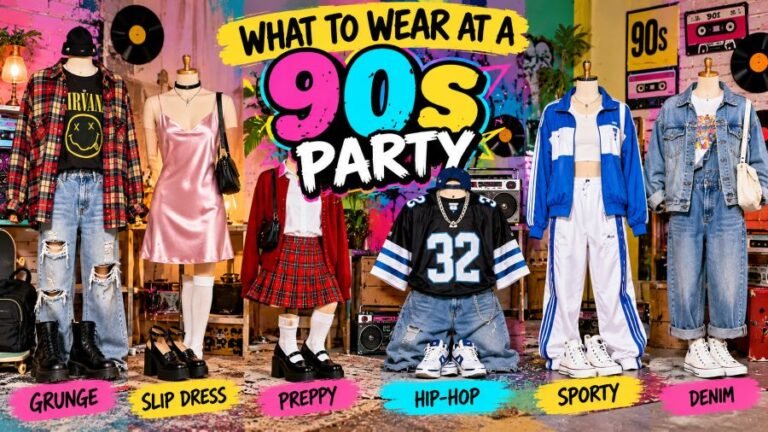
Grunge helped make baggy jeans, flannel shirts, loose clothing and chunky footwear widely recognised. Minimalism became stronger later in the decade.
Sportswear, denim and simple everyday pieces from this period now sit firmly inside the vintage market.
Early 2000s Vintage Clothing
Yes, we are here already.
Early-2000s fashion is now moving into the vintage category under the 20-year rule.
Common pieces include low-rise jeans, bootcut denim, fitted tops, tracksuits, logo clothing, cargo trousers and other Y2K-era designs.
But always check the actual production period.
A Y2K-style top made last year is still modern.
How Can You Tell If Clothing Is Really Vintage?
This is the fun part.
You need to look closely.
No single detail can date every garment, so check several things together.
1. Check the Brand Label
Start here.
Brand logos and label designs often changed across different periods.
An old version of a company’s label may help narrow down the manufacturing date.
The Vintage Fashion Guild keeps a large historical label resource for this exact reason.
Do not judge by the label alone, though.
Copies exist.
2. Look at the Care Label
Care labels can provide useful clues.
For example, permanently attached garment-care labels became required in the United States in 1972. A modern-style care tag may suggest a later manufacturing date.
A missing care label does not prove an item is old.
Someone may have cut it out.
3. Check the Zipper
Zippers tell stories.
Their material, position and maker can help narrow the date.
The Vintage Fashion Guild notes that side-seam zippers were common from the late 1930s through the 1960s, while plastic coil zippers did not become commonly used until the early 1960s.
Still, do not date a whole garment from one zipper.
Parts can be replaced.
4. Inspect the Stitching
Turn the garment inside out.
Look at the seams.
Older pieces may show different finishing methods, hand sewing, bound seams, unusual hems or construction details that are less common in cheap modern clothing.
Quality vintage pieces may have handset zippers, covered buttons, piped seams, silk linings or bound buttonholes.
5. Check the Fabric
Fabric can help narrow the timeline.
Natural fibres such as wool, cotton, linen and silk have long histories, so they cannot date an item by themselves.
Synthetic fibres can provide useful clues.
For example, nylon became available to consumers around 1940, while Dacron polyester was used in clothing from the 1950s.
Again, treat fabric as one clue.
6. Look at the Shape
Fashion shapes change.
Shoulders, waistlines, sleeve shapes, trouser widths, skirt lengths and collars can all point toward an era.
Compare the garment with documented examples from the period.
Small details matter.
7. Check Where It Was Made
Country-of-origin tags may offer another clue.
Manufacturing moved between regions and countries across different decades.
A label can sometimes help narrow the likely production period when matched with the brand’s history.
Does Vintage Clothing Have Different Sizes?
Yes.
This catches buyers out.
A vintage size label may not match today’s size system.
A vintage size 12, for example, should not automatically be treated like a current size 12.
Cuts changed.
Sizing standards changed too.
For online vintage shopping, actual garment measurements matter far more than the number printed on the tag.
Check:
- Chest or bust
- Waist
- Hips
- Shoulder width
- Sleeve length
- Garment length
- Rise
- Inseam
Compare those measurements with clothing you already own.
That is safer.
Is Vintage Clothing Better Quality?
Sometimes.
Not always.
Many surviving vintage pieces were well made, but every period produced cheap clothing too.
There is another issue.
Poorly made old garments may have disappeared years ago, while stronger pieces survived.
That can make older clothing appear better across the board.
Judge the actual item.
Check its seams, fabric, lining, buttons, fastening points and weak areas.
Age alone proves nothing about quality.
What Makes Vintage Clothing Valuable?
Some vintage clothes sell cheaply.
Others can become collector pieces.
Price depends on several things.
The Vintage Fashion Guild advises buyers and sellers to look closely at details such as labels, construction and condition when judging an item.
Main value factors include:
- Age
- Rarity
- Brand or designer
- Condition
- Original details
- Demand
- Size and wearability
- Historical interest
- Provenance
- Current fashion interest
A famous label does not guarantee a high price.
Neither does age.
Demand matters.
What Condition Problems Should You Check?
Old clothing has lived a life.
Inspect it properly.
Watch for:
- Holes
- Moth damage
- Fading
- Stains
- Missing buttons
- Broken zips
- Weak seams
- Torn lining
- Old repairs
- Stretching
- Damaged elastic
- Strong odours
- Fabric weakness
- Previous alterations
Good sellers should clearly describe faults.
The Vintage Fashion Guild’s selling standards ask members to describe known repairs, alterations and flaws rather than hiding behind a vague phrase such as “vintage condition.”
Is Vintage Clothing Sustainable?
Buying vintage can help keep existing clothing in use for longer.
That matters because producing new clothing uses materials, energy and other resources.
WRAP reported in 2025 that about 64.6% of second-hand purchases in its research displaced the purchase of a new item.
WRAP has also reported that extending clothing life can cut its carbon, water and waste footprint.
But buying vintage is not automatically perfect for the planet.
If somebody buys far more clothing simply because it is second-hand, the benefit changes.
The useful idea is simple: buy things you will actually wear and keep them in use.
Where Can You Buy Vintage Clothing?
Vintage clothing can appear almost anywhere.
People often find it through:
- Vintage clothing shops
- Charity shops
- Online marketplaces
- Vintage fairs
- Car boot sales
- Estate sales
- Auctions
- Specialist dealers
- Old family wardrobes
- Clothing markets
Each option is different.
A specialist dealer may charge more because they have already researched, checked, cleaned and measured the piece.
A charity-shop find may cost less.
But you may need to do the research yourself.
How to Buy Vintage Clothing Without Regretting It
Slow down first.
Check the measurements.
Then inspect the condition.
Ask for photos of the label, seams, zipper and any damaged areas if buying online.
Read the description closely.
Do not buy only because something says “rare vintage.”
That wording proves nothing.
Look for real evidence.
Also think about whether you will wear it.
A bargain you never use is still wasted money.
How Should You Care for Vintage Clothing?
Be careful here.
Older fabrics can react badly to heat, water or strong cleaning products.
Never assume every vintage garment can go into a washing machine.
Check the fibre.
Read any surviving care tag.
Look for loose stitching, weak fabric and unstable colour before cleaning.
Very old, valuable, embellished or fragile clothing may need a specialist cleaner or textile conservator.
Dry storage also matters.
Keep pieces away from damp areas and strong sunlight.
Heavy or weak garments may be better stored flat rather than hanging under their own weight.
Why Is Vintage Clothing So Popular?
There is no single reason.
Some people like the style.
Others like finding pieces that are harder to see in normal high-street shops.
Collectors may hunt for certain designers, labels, football shirts, band tees, denim, jackets or specific fashion eras.
And some shoppers simply prefer giving an existing garment another life.
Vintage also offers something modern clothing cannot copy perfectly.
History.
The garment really came from that period.
Explore About: Sell Online Clothes
Common Myths About Vintage Clothing
“All second-hand clothes are vintage.”
No.
A two-year-old used jacket is second-hand, not vintage.
“Vintage and retro mean the same thing.”
No.
Vintage was actually made in the earlier period. Retro normally copies an old look.
“Everything vintage is expensive.”
Not true.
Many pieces remain affordable.
“Vintage always means better quality.”
No.
Check each garment separately.
“Vintage clothing has to be worn before.”
No.
Unworn deadstock can still be genuine vintage.
“Anything Y2K is vintage.”
Not quite.
The item needs to be genuinely old enough. New clothing with Y2K styling is modern.
Explore More: VInted Related
Final Thought
Vintage clothing is easier to understand once you separate age from style.
A genuine older garment may be vintage even if it still looks current. A brand-new dress can look exactly like the 1960s and still not be vintage.
For most shoppers, the 20-year rule is a useful starting point.
Then check the details.
Labels. Fabric. Stitching. Zippers. Shape. Condition.
That is how you get closer to the real story behind a piece.
Frequently Asked Questions
What is vintage clothing?
Vintage clothing is genuine clothing from an earlier period, commonly at least 20 years old.
How old do clothes need to be to count as vintage?
A widely used standard is 20 years or more, though some collectors use a higher age limit.
Are clothes from 2000 considered vintage?
Yes. Clothing genuinely made in 2000 is more than 20 years old in 2026.
Are 2005 clothes vintage?
Yes, under the commonly used 20-year standard.
Is vintage clothing second-hand?
It can be, but it does not have to be. Unworn old stock can also be vintage.
What is the difference between vintage and retro?
Vintage clothing was actually made in an earlier period. Retro clothing is usually newer clothing made to copy an older look.
How can I tell if clothes are vintage?
Check the label, care tag, stitching, zipper, fabric, manufacturing details and shape. Several matching clues give a better answer than one detail alone.
Does vintage clothing have value?
Some pieces do, but age alone does not create value. Brand, rarity, condition, demand and history can all affect price.